


Click the button to start reading
What to Do When Your Project Goes Off the Rails
Even the best teams hit rough patches.
A delayed deliverable, a breakdown in communication, a stakeholder who’s suddenly MIA—any of these can nudge a project off track.
But going off the rails doesn’t mean you’re doomed. It means it’s time to lead.
Stage 1: Spot the Red Flags Early
Think of red flags as your early-warning system. They’re the blinking lights telling you something’s wrong before disaster hits. The sooner you identify them, the easier it is to intervene and redirect.
- Silence from stakeholders – When previously chatty sponsors go quiet, it’s often a sign of disengagement or unresolved concerns.
- Missed milestones – One skipped deadline may be nothing. Two? That’s a pattern. Watch the cadence of deliverables.
- Low team morale – When your high performers seem checked out, motivation may be slipping—and it’s contagious.
- Unclear ownership – Confusion over who’s doing what breeds delay, miscommunication, and finger-pointing.
- Constant firefighting – If your team spends more time reacting than planning, your project is likely running on fumes.
Use tools like Teamly to keep updates visible and accountability high. With everyone aligned in a shared workspace, warning signs can’t hide in silos.
Bonus tip: Track response time. If task comments sit unanswered or progress updates stall, it may signal internal friction or unclear priorities.

Stage 2: Course-Correct Quickly
Once you realize your project’s veering off path, the worst move is no move. Timeliness beats perfection when momentum’s at stake.
Great teams don’t panic—they pivot with clarity and purpose.
1. Pause and Diagnose
Host a quick huddle—not a full-blown meeting, just a focused check-in. Ask:
- What changed since our last milestone?
- Are we blocked, or just behind?
- What do we need to make progress this week?
Encourage candor. Ask open-ended questions to uncover root issues. Sometimes the problem isn’t in the work—it’s in how the work is organized.
2. Prioritize Ruthlessly
What must ship, and what can shift? Kill nonessentials (for now) and reallocate time and resources to what matters most. Use the Eisenhower Matrix or MoSCoW method to classify tasks.
3. Reassign with Clarity
When projects stall, role confusion often plays a part. Reconfirm who owns what, when, and why. Bonus points for documenting it inside your workflow tool. Visibility helps reduce repetition, dropped balls, and unnecessary handoffs.
And don’t forget capacity. Stretching overloaded teammates thinner rarely ends well. Assess bandwidth before reassigning.

Stage 3: Communicate Like a Pro
No one likes bad news, but everyone appreciates transparency. Especially your stakeholders. Your goal isn’t to sugarcoat—it’s to inspire confidence that you’re in control, even when things are messy.
Craft the Right Message
Give them the facts. Be brief. Be honest. And don’t bury the lead. Avoid technical jargon and stick to outcome-driven language.
Example: “We’re two weeks behind due to resource bottlenecks. We’ve reallocated our team and trimmed scope to recover timeline. We expect to be back on track by [insert date].”
Offer Solutions, Not Excuses
Stakeholders want to know: Do you have this under control? Make it clear you do. Show them the plan, and be open to input.
Anticipate their questions before they ask. Prepare to explain how changes affect budget, scope, and deadlines—especially if approvals are needed.
Pro tip: Share a visual timeline or a before/after roadmap. It builds credibility and gives stakeholders something to respond to, not just react to.
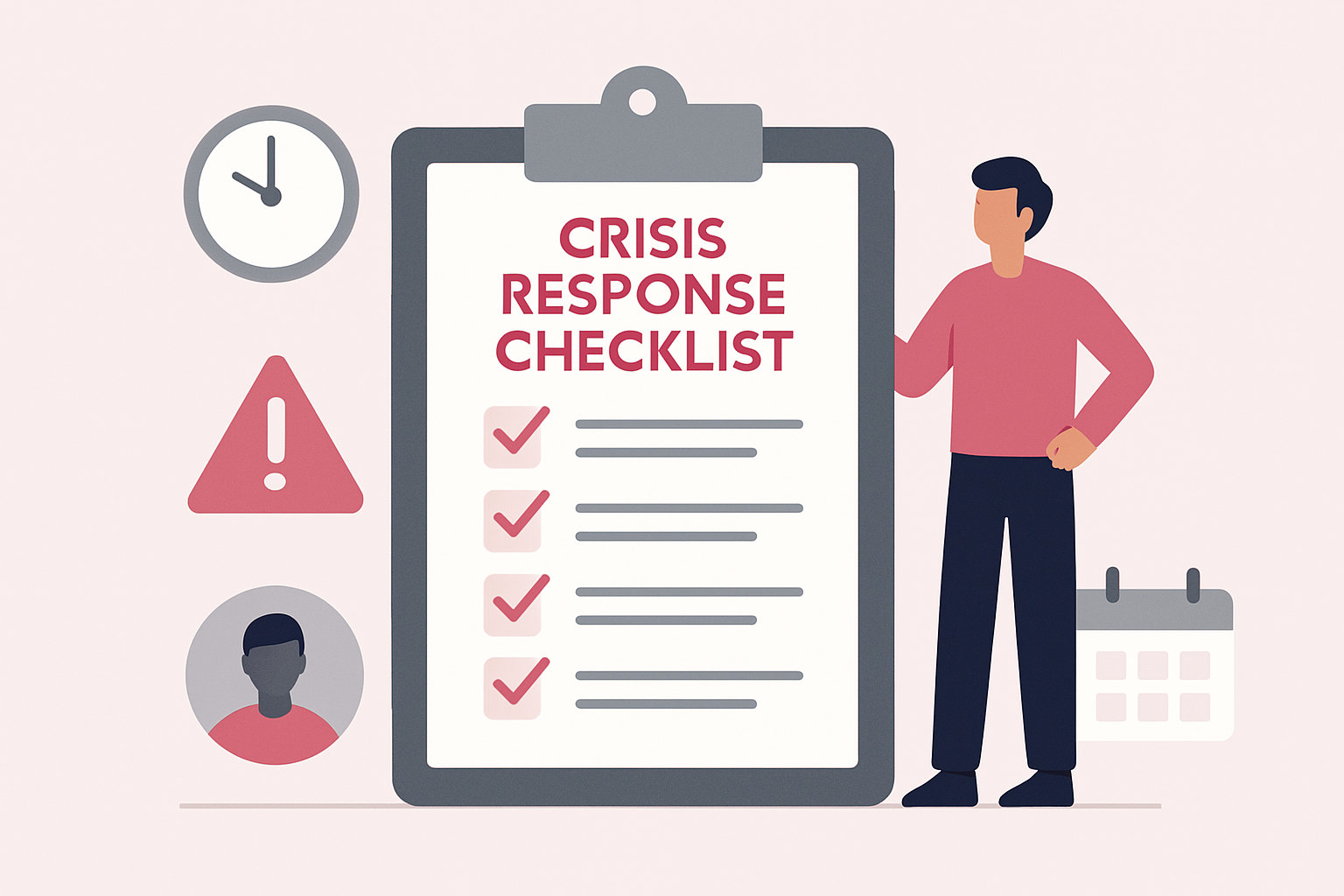
Crisis-Response Checklist
In those high-stress moments, it helps to have a playbook. Here’s yours:
- Pause for clarity. Take 30 minutes to assess before reacting. Urgency doesn’t mean panic.
- List the known issues. Brainstorm unknowns. Even a whiteboard list can make chaos more manageable.
- Reprioritize tasks. Eliminate the non-critical and reinvest time where impact is highest.
- Reconfirm roles. Assign owners and deadlines. Clarity is a pressure valve.
- Update stakeholders. Lead with facts and solutions. Ask for input if decisions affect them directly.
- Track the plan publicly. Use a tool like Teamly so progress is visible and celebrated.
- Schedule a pulse check. Don’t wait until the next sprint review—check progress in 48 hours.

Stage 4: Post-Mortem Without Blame
When the dust settles, it’s tempting to move on. Don’t. Take time to extract the lessons. This is where future excellence is born. Even small projects deserve a thoughtful retrospective.
Run a Blameless Post-Mortem
Focus on systems, not individuals. Ask:
- Where did our process break down?
- What signals did we miss?
- How can we build a safeguard to catch this earlier next time?
Encourage honesty without fear. When people feel safe to speak, you hear what really happened—not just the polished version.
Document the Takeaways
Summarize key insights. Then integrate them into your planning docs, your Teamly templates, your retros. Learn loudly.
Assign owners to each improvement. Put dates on them. Otherwise, your lessons learned become lessons lost.
And always ask: “What worked well?” Even in derailment, you’ll find moments of excellence worth repeating.
Derailments happen. But with the right approach, they can lead to better systems, stronger communication, and smarter teams. Don’t fear the chaos—use it to evolve. When you own the narrative, you shape the outcome. That’s what great project managers do.