
Click the button to start reading
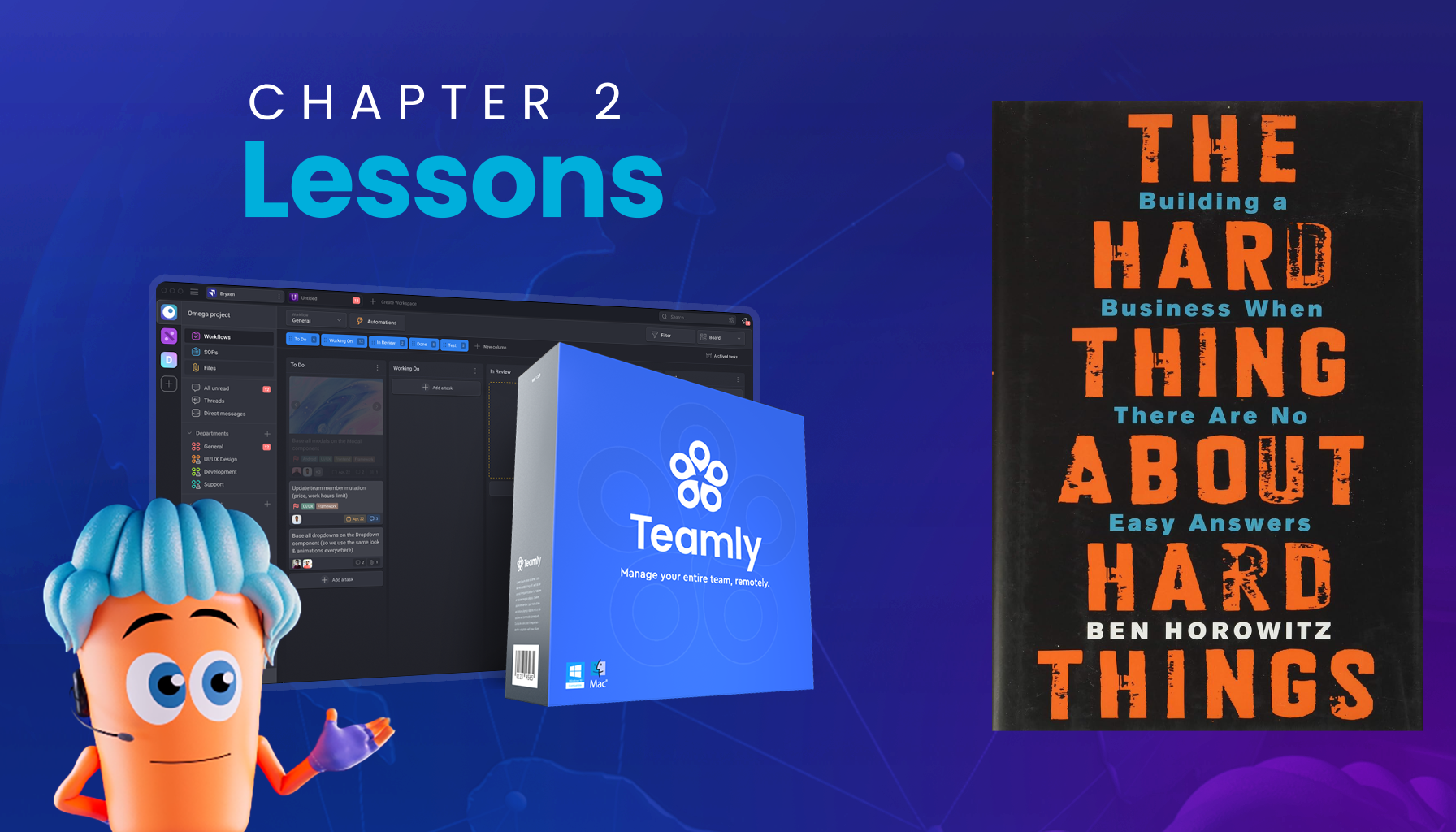
Lessons from “The Hard Thing About Hard Things” by Ben Horowitz – Chapter 2
If you’re running a business or leading a team, you’ve probably already figured out one thing: it’s tough.
But the tough moments are when you learn the most. That’s why Ben Horowitz’s book, The Hard Thing About Hard Things: Building a Business When There Are No Easy Answers, is an essential read.
Horowitz doesn’t offer a fairy tale about overnight success. Instead, he gives you the raw, unfiltered truth about what it really takes to keep a company alive — even when everything seems to be going wrong.
Horowitz’s lessons are for those in the trenches, whether you’re leading a small startup or steering a large organization.
He breaks down the difference between simply managing during the good times and surviving during the bad times.
More importantly, he shares practical advice that will resonate with any business leader who’s been up against the ropes. His insights will push you to become more resilient, agile, and prepared for whatever your business throws at you.

The Difference Between a Peacetime CEO and a Wartime CEO
Being a CEO in good times and bad times are two completely different things. In peacetime, CEOs can afford to focus on long-term goals, optimizing processes, and tweaking strategies.
But during a crisis, the role transforms completely. In wartime, there’s no room for fluff. Every decision could mean the difference between survival and collapse. This is a major theme in Horowitz’s book — one that resonates deeply with any business leader.
When the dot-com bubble burst, Horowitz had to switch from a peacetime CEO to a wartime CEO almost overnight.
At Loudcloud, his tech startup, he was forced to make rapid, difficult decisions to save his company from the brink of bankruptcy.
He knew that every action counted and that he needed to fully own the outcome of each decision.
This kind of leadership is raw, tough, and necessary when navigating a business through crisis. Horowitz teaches that in the worst moments, you have to make the hard calls.
For many entrepreneurs, the distinction between peacetime and wartime leadership can make all the difference.
It’s easy to feel secure when things are going well, but true leadership is tested in tough times. When a company’s survival is on the line, there’s no place for indecision.
Business owners must learn to adapt and react swiftly to crises, knowing that each decision could have far-reaching consequences.

Facing Financial Disasters: A Lesson in Resilience
It’s no secret that many businesses fail because of financial problems. And Horowitz has been there.
At one point, Loudcloud was bleeding cash, and bankruptcy was looming large. His largest customer, Atriax, declared bankruptcy without warning, ripping a $25 million hole in Loudcloud’s financial plan.
Horowitz didn’t let this disaster destroy his company. Instead, he pivoted.
He separated Loudcloud’s most valuable asset, its software platform called Opsware, and transformed the company into a software business. This isn’t just a story about survival; it’s about resilience, flexibility, and finding new paths when the old ones fail.
Entrepreneurs everywhere will find this lesson powerful: sometimes, success is about finding a completely different way forward.
Every entrepreneur knows that financial disasters can feel like the end of the road. But Horowitz’s experience shows that with the right mindset, they don’t have to be.
His decision to pivot, even when it meant laying off employees and selling a significant part of his company, was difficult — but necessary.
The key takeaway is that sometimes, when faced with financial failure, the most resilient leaders find creative ways to turn the situation around. If a core part of your business isn’t working, it’s time to adapt.

The Importance of Trusting Advisors
Horowitz’s story isn’t just about doing it all alone. One of the key takeaways from his book is the value of having trusted mentors and advisors during difficult times.
Two figures in particular — Bill Campbell and John O’Farrell — play a significant role in Loudcloud’s survival.
Bill Campbell, a seasoned executive, helped Horowitz navigate some of the most challenging moments in his career. His advice on layoffs, communication, and leadership wasn’t just theoretical.
Campbell had been through it all, and he knew how to help Horowitz make the tough calls. Campbell’s leadership insights were shaped by decades of experience, and his mentorship helped guide Loudcloud through what could have been fatal missteps.
And then there’s John O’Farrell, who led Loudcloud’s business development and helped secure a life-saving deal with EDS. His skill in negotiating complex deals was invaluable to Loudcloud’s future.
O’Farrell’s expertise ensured that Loudcloud could transition out of its cloud business and into a software-based future, securing the company’s long-term viability.
For anyone running a business, the lesson is clear: don’t try to go it alone. Surround yourself with people you trust, and lean on them when the going gets tough.
Even the most skilled leaders benefit from having a solid support system. Advisors offer not just guidance, but also the perspective that can be hard to see when you’re deep in the trenches of decision-making.
Whether you’re making strategic pivots or tough financial calls, having the right team by your side can be the difference between success and failure.
Transparent Communication During Tough Times
When Loudcloud was in its toughest moments, Horowitz was given one piece of advice that would define how he handled the situation: be transparent with your employees.
Bill Campbell told him to stay behind during a major announcement to personally address the people who were directly impacted by layoffs and restructuring. He needed to be there to explain who would stay, who would go, and what the future held.
This piece of advice proved to be pivotal. By staying transparent and treating his employees with respect, Horowitz maintained the trust of the team that remained at Loudcloud after the sale of its core business.
Leaders who communicate openly during tough times will not only earn the respect of their team, but also build a foundation for long-term trust.
In times of uncertainty, leadership can easily feel disconnected from their employees. But, as Horowitz shows, transparency builds confidence and loyalty.
By keeping the lines of communication open and showing respect for employees’ concerns, business leaders can navigate tough transitions with their teams intact.
Whether you’re running a business with a tool like Teamly or managing a large company, the principle remains the same: be honest, clear, and consistent with your communication during difficult periods.

Adapting to Change: Pivoting When Necessary
Horowitz’s journey is also a testament to the power of adaptability. After realizing that the cloud business wasn’t sustainable for Loudcloud, he made the difficult decision to pivot to a software company.
This pivot wasn’t easy, and it involved laying off employees and selling the cloud business to EDS. But it was a necessary move, and it ultimately saved the company.
The lesson here is one that applies to every business, big or small: when circumstances change, don’t be afraid to pivot.
Holding on to an idea or business model that’s no longer viable can be dangerous. Flexibility is one of the most valuable traits a leader can have, especially when facing unpredictable challenges.
As Horowitz shows, it’s often the bold moves that keep a business alive when things look bleak.
Successful entrepreneurs understand that the landscape of business is ever-changing. The ability to shift gears, embrace new strategies, and let go of old plans is essential for long-term survival.
Horowitz’s pivot from cloud services to software is a powerful example of how businesses can reinvent themselves to stay competitive and relevant, even when it seems like there’s no way forward.
To learn more about Ben Horowitz’s incredible journey and insights, grab a copy of The Hard Thing About Hard Things and dive into the raw, real-world lessons on leadership and entrepreneurship.