
Click the button to start reading
Productivity Systems for Managers: Daily Checklists that Make a Real Difference
As a manager, you’re pulled in a dozen directions at once. There are back-to-back meetings, urgent emails, and constant notifications vying for your attention.
Yet, despite the flurry of activity, you might sometimes wonder if all that effort is actually moving the needle.
That’s where a solid productivity system can change everything. In the space between “busy” and “productive,” there’s a world of difference—and your daily checklist might just be the key to bridging that gap.

Why “Busy” Doesn’t Always Equal “Productive”
It’s common to look at a jam-packed schedule and assume it reflects success. After all, having a full calendar must mean you’re in high demand—right?
But being busy can mask inefficiencies. It’s all too easy to stay in motion without actually progressing toward meaningful results. This is the trap many managers fall into: constant hustle, minimal forward movement.
The real measure of productivity is how effectively you meet your objectives.
Are you completing the tasks that genuinely matter?
Do your daily efforts align with key metrics for your team?
Are you setting a strong example by focusing on strategic priorities, rather than firefighting?
These questions can guide you in distinguishing between everyday busyness and true productivity.
The Core Components of an Effective Productivity System
A productivity system isn’t just a fancy term for “to-do list.”
It’s a structured approach that ensures your daily actions contribute to broader goals. Before you dive into building your own checklist, take a moment to understand what makes a system both flexible and robust:
- Clarity of Focus: You know exactly which tasks move the needle. These tasks connect directly to the bigger picture—team milestones, departmental KPIs, or company-wide objectives.
- Time Management: Instead of letting your day “happen” to you, a great system slots in focused work periods, buffers for urgent issues, and even downtime for strategic thinking.
- Prioritization: All tasks aren’t created equal. A strong productivity framework helps you tackle high-impact items before they’re pushed aside by lesser priorities.
- Flexibility: Managers don’t operate in a vacuum. You need a system that can flex when urgent tasks suddenly drop into your inbox.
- Accountability: Productivity skyrockets when there’s accountability. Whether it’s an internal system, a dedicated app, or even a shared tool like Teamly, holding yourself and your team accountable is essential for consistent progress.
These core components can keep you grounded even when unexpected fires pop up. When you set each day’s tasks within this framework, you’ll find it far easier to track progress, measure impact, and adapt when things go off-script.

Building Your Daily Checklist: A Blueprint for Results
Let’s move beyond theory and into practice with a day-to-day approach.
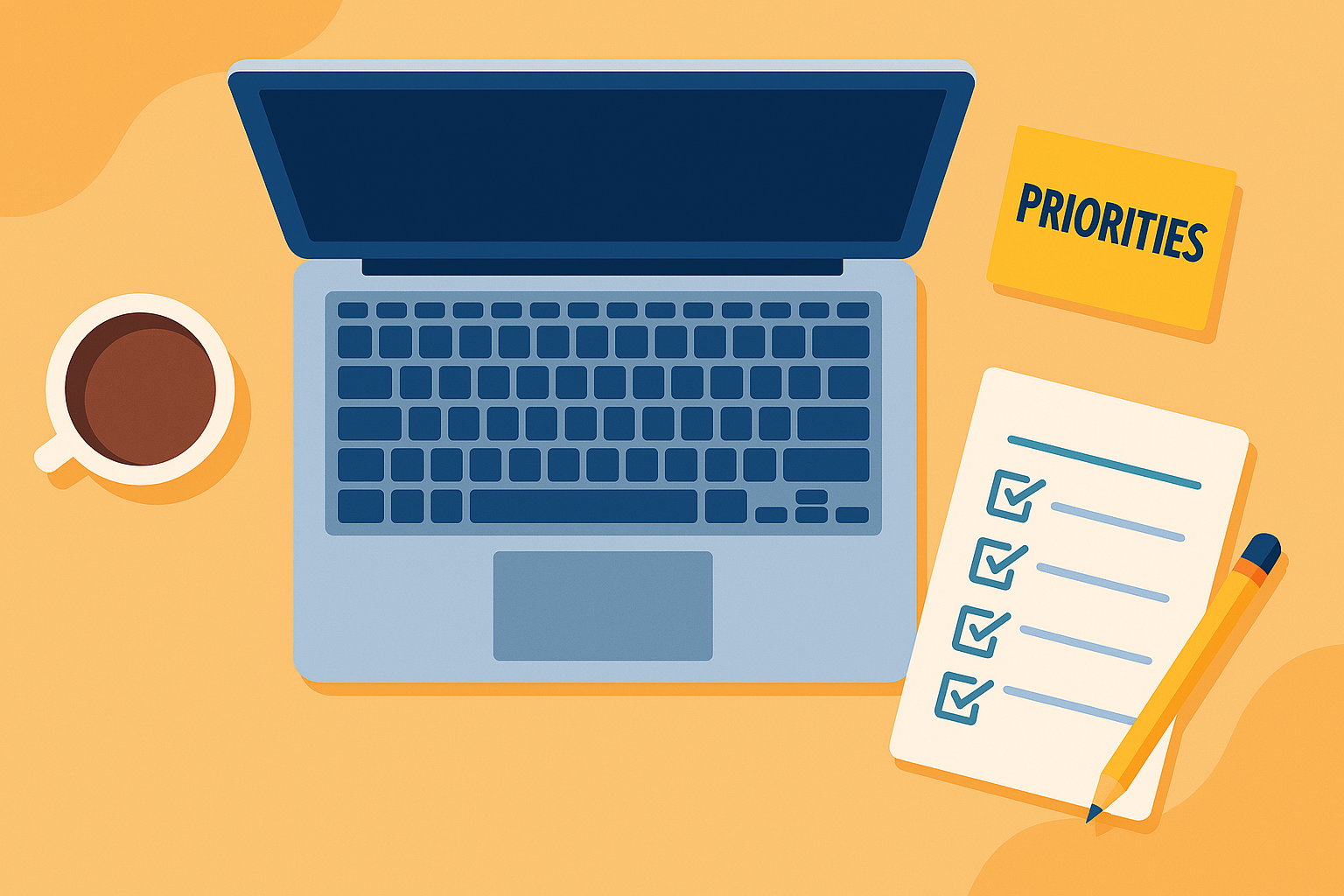
A well-structured checklist is a simple but powerful way to organize your energy and ensure you stay on course. Consider integrating the following points into your daily management routine:
1. Morning Prioritization Session
Begin each day by reviewing the key outcomes you need to achieve. This short session—no more than 10 to 15 minutes—helps you visualize the day ahead. Ask yourself:
- Which tasks align with major goals or deadlines?
- What can only you do and must be done today?
- Which tasks are time-sensitive but could be delegated if necessary?
Starting with this type of clarity cuts down on wasted time and haphazard scheduling. It also ensures that even if the day unravels, you’ve earmarked your top priorities.
2. Communication Check-Ins
Touch base with your direct reports, project stakeholders, or cross-functional collaborators.
This doesn’t have to mean long meetings—often a short email or quick message is enough to keep everyone aligned. Use this slot to:
- Confirm progress on critical tasks
- Identify any resources your team might need
- Offer brief coaching or guidance
Regular check-ins are like tiny hinges that swing big doors; they help prevent miscommunication and keep your projects on the rails.
3. Focused Work Block
Carve out at least one 60 to 90-minute block of uninterrupted time in the morning or early afternoon.
Use this period for high-priority tasks that require deep concentration. Turn off notifications, close unnecessary browser tabs, and hold that boundary firmly. Deep work sessions can dramatically boost your output on tasks that drive real results.
4. Brief Team Meeting (If Needed)
Before scheduling any meeting, ask: “Is this discussion necessary?” If the answer is no, postpone it or handle it asynchronously.
If you do need a meeting, ensure it’s concise, agenda-driven, and laser-focused on decisions or problem-solving. Use a standard template for these gatherings to save time and streamline the discussion:
- Agenda Items: List out top priorities to be covered.
- Time Allocations: Stick to a strict time limit for each topic.
- Action Items: Document who’s responsible for what, including deadlines.
Well-run meetings won’t bog you down; they keep the momentum going.
5. Afternoon Review of Progress
In the early afternoon, pause for a quick status update. Check how you and your team are progressing toward the day’s goals.
Refine priorities if you’re behind schedule, and address small fires before they turn into full-blown infernos.
This check-in can be as simple as scanning your task list or popping into a project management tool, such as Teamly, to see if deadlines are on track.
6. Email and Admin Block
Reserve a specific window—ideally, later in the day—for emails, paperwork, and other administrative tasks.
By batching these less demanding tasks, you free up prime mental energy for higher-value work earlier. This approach also prevents your inbox from dictating how your day unfolds.
7. Day-End Assessment
Wrap up your day with a quick evaluation of what went well, what didn’t, and what the next day should look like.
This reflection prevents small issues from compounding into bigger ones and fosters a mindset of continuous improvement.

Leading Meetings Efficiently: The Manager’s Edge
Your daily checklist probably involves multiple meetings. So, it pays to get them right.
Effective meeting management is about more than just having an agenda—it’s about holding yourself and others accountable. Shorter, well-run meetings can yield clearer outcomes than lengthy sessions that meander aimlessly.
If your organization tends to schedule too many meetings, consider alternatives like asynchronous updates or quick video check-ins.
You might also institute “meeting-free days” to give everyone time for deep, focused work. When meetings do occur, close them with a recap of action items and deadlines.
The difference this small step can make in overall productivity is remarkable.
Reviewing Team Output: Quality Over Quantity
One major component of managerial productivity is the ability to quickly and accurately assess your team’s output.
The challenge often lies in distinguishing essential updates from time-wasting minutiae. Instead of requiring a complete breakdown of every minor task, ask for top-level summaries of outcomes, next steps, and potential roadblocks.
When it comes to more substantial deliverables, ensure you have a standard review process:
- Outline expectations upfront: Clarify timelines, format, and quality standards.
- Focus on the “why” as well as the “what”: Understanding the reasoning behind certain approaches can reveal deeper insights into your team’s decision-making.
- Provide constructive feedback: Encourage improvement through balanced feedback that addresses both strengths and areas for growth.
This consistent review mechanism ensures your team knows exactly how their performance aligns with your broader goals.

Bonus Considerations: Remote Teams and Time Zone Differences
If you manage a distributed team scattered across multiple time zones, your productivity checklist needs an additional layer of foresight. Here are a few considerations to help you navigate these complexities:
- Shared Calendars: Make transparent calendars available for everyone on the team. This helps avoid scheduling conflicts and respects personal working hours.
- Asynchronous Communication: Lean on messaging platforms and shared documents for updates. This reduces the scramble to find overlapping meeting times.
- Flexible Meeting Slots: Consider rotating the times for essential live meetings, so the burden of odd hours doesn’t always fall on the same individuals.
- Trust and Output-Based Goals: Focus on results rather than micromanaging schedules. Empower team members to complete tasks in their optimal working windows, as long as deadlines are met.
By weaving these remote-friendly strategies into your daily checklist, you make sure no one feels left out and everyone stays on track, regardless of location.
Common Productivity Pitfalls—and How to Avoid Them
Even the most robust productivity system can fall victim to everyday pitfalls. Recognizing these issues early can save you from wasting precious time:
- Overstuffed Checklists: Loading up your day with too many tasks only sets you up for disappointment. Be realistic about what you can accomplish in a given timeframe.
- Lack of Delegation: Just because you can do something doesn’t mean you should. Delegate or outsource tasks that don’t require your unique expertise.
- Multitasking: Jumping between tasks dilutes focus. If you find yourself doing two things at once, you might not be doing either effectively.
- Procrastination on Tough Tasks: When you repeatedly postpone a challenging or uncomfortable task, it becomes harder to tackle. Address it early in the day or break it into smaller steps.
- Ignoring Health and Well-Being: Productivity suffers when you’re exhausted. Adequate breaks, hydration, and a healthy diet aren’t luxuries—they’re prerequisites for sustained high performance.
Regularly revisiting your system and making small adjustments can help you dodge these productivity pitfalls. Think of your system as a living framework, evolving with your responsibilities and team dynamics.

Putting It All Together
When you commit to a well-designed productivity system, you’re setting the tone for your entire team.
It’s not about working longer or juggling more tasks—it’s about working smarter and focusing on what truly matters. The daily checklist might seem simple, but its power lies in consistent execution, adaptability, and accountability.
By integrating structured routines like a morning prioritization session, a blocked-off deep work period, and a quick afternoon progress review, you create an environment where real progress happens.
Your team feels the difference when each day starts with clarity and ends with a sense of accomplishment.
And as you consistently refine these habits, you’ll notice that what used to feel like chaotic “busyness” is replaced by sustained, meaningful productivity.
So, set aside the frantic scramble of half-finished tasks and unanswered emails.
Embrace a productivity system that reflects your role as a manager, shaping the direction and energy of your team.
With the right daily checklist, you become the linchpin of efficiency—guiding not just yourself, but everyone looking up to you for leadership. And trust that the shift from busy to truly productive will be noticed at every level of the organization.