
Click the button to start reading
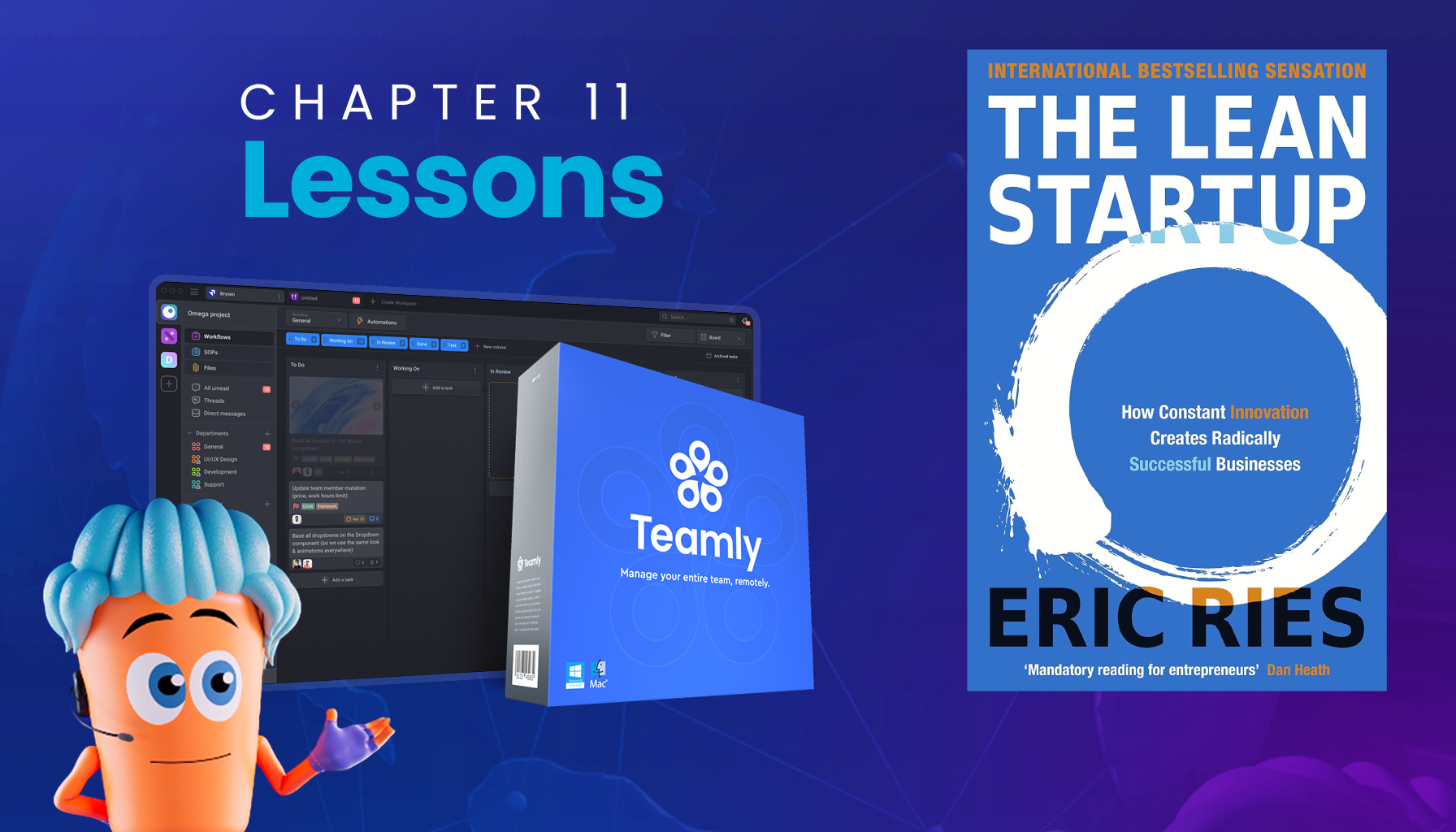
Lessons from The Lean Startup By Eric Ries: Chapter 11
Chapter 11 of The Lean Startup maps out how organizations move beyond makeshift, ad-hoc methods and begin systematically adapting to growth, complexity, and continuous change.
It reveals the importance of tackling core issues through rigorous analysis, steady experimentation, and an unflinching willingness to face uncomfortable truths.
The chapter explores how teams can shift from old-world guesswork to a scientific, learning-based approach, using tools like the Five Whys, incremental training investments, and smaller batch sizes to create robust, resilient systems that evolve naturally over time.

Rethinking Responsibilities as the Startup Scales
The chapter opens with a stark realization: roles and responsibilities shift as a startup grows, sometimes without any formal announcement.
What once seemed effective suddenly falls short. Teams must accept that as new challenges emerge, old job descriptions become obsolete.
The key is not to resist these changes but to embrace them. The chapter warns that clinging to outdated structures can lock organizations into patterns that stall learning and thwart progress.
Early on, it’s made clear that no company can thrive on chaos alone. While rigid bureaucracies stifle innovation, complete absence of structure leads to avoidable mistakes and delays.
Chapter 11 argues that there is a middle path—systems that are lean, iterative, and grounded in real-world data.
The chapter’s advice resonates perfectly with business owners who know that simply “winging it” can only work for so long, especially as teams scale and stakes get higher.

The Five Whys: A Tool for Root-Cause Analysis
At the heart of the chapter is the Five Whys technique, borrowed from the Toyota Production System.
Asking “Why?” repeatedly to drill down through layers of symptoms to the true source of a problem transforms how teams identify and address issues.
Instead of patching a fuse or replacing a pump shaft, companies uncover that a missing strainer or a neglected training process caused the breakdown in the first place.
By going beyond surface-level fixes, the Five Whys ensures that once a root cause is found, the solution addresses it head-on.
This reduces the risk of recurring issues and frees the team from firefighting mode. The ultimate goal is to convert one-off errors into long-term opportunities for learning and improvement.
Startups that adopt this practice consistently gain an edge, as they spend fewer hours redoing work and more time delivering customer value.
From Technical Glitches to Human Problems
One of the chapter’s core insights is that most errors framed as “technical” are often human or process-driven.
For example, a code deployment that disrupts service might reveal that an engineer never received proper training.
The Five Whys guide teams to these underlying human issues, prompting organizations to invest in training, mentoring, or clearer documentation. By doing so, they not only fix the issue once but prevent it from emerging again and again.

Building a Culture of Continuous Improvement
Chapter 11 is not just about solving problems; it’s about creating a culture that values transparency and iterative refinement.
The Five Whys naturally support a trusting environment where mistakes are catalysts for learning, not triggers for blame. To help teams get started, the chapter suggests a simplified two-rule approach:
- Be tolerant of all mistakes the first time.
- Never allow the same mistake to happen twice.
Over time, teams progress to full-fledged Five Whys sessions that include everyone affected by a problem.
This broad participation ensures that no context is lost and no scapegoating occurs. Senior leadership plays a vital role here, modeling accountability and insisting on data-driven resolutions.
Each session makes small, proportional investments in prevention. Minor issues get minor fixes; major recurring problems demand bigger corrective action. This measured approach safeguards resources while ensuring continuous gains in efficiency and reliability.
While the Five Whys provide a steady compass, success depends on more than a method.
Teams must commit to adapting their mindset. As organizations mature, these lean principles evolve from novel experiments into everyday practices. Over time, improvements accumulate until the company runs with a “cluster immune system” that naturally repels inefficiencies and defects.

From Chaos to Strategy: The Power of Training and Systems
Chapter 11 underscores that training and clear processes are not luxuries—they are strategic imperatives.
Just as products start with a Minimum Viable Product (MVP), internal operations benefit from a similar incremental approach.
For example, dedicating mentors to onboard new employees, standardizing workflows, and constantly refining training materials transforms a team’s productivity. The result is a consistently higher-quality output and a team better equipped to pivot as markets change.
These incremental, system-level improvements balance speed with quality. Without them, startups can degrade into frantic hustles where everyone scrambles and few learn.
By contrast, investing in systematic solutions keeps the build-measure-learn loop turning steadily. As a bonus, companies that integrate these practices early find scaling less painful. The organization moves forward with agility and purpose rather than stumbling from crisis to crisis.
The QuickBooks Story: Scaling Lean in an Established Context
To illustrate how these principles apply at scale, the chapter offers the QuickBooks case study. Intuit’s flagship product had historically used a large-batch, annual release cycle.
They planned months in advance, locked in the product design early, and only tested at the end. This old “waterfall” approach left them vulnerable.
They “achieved failure” by perfectly executing a plan that missed actual customer needs. When the product launched, customers spent far too long reconciling banking transactions.
Without early feedback loops, it took nearly nine months to fix the flaw and left Intuit embarrassed by a sharply declining Net Promoter Score.
Recognizing the need for change, Intuit’s leadership asked the team to adopt leaner methods: smaller teams, shorter cycles, and continuous customer engagement.
The shift was not smooth. Some product managers questioned their new roles, engineers were unsure about talking directly to customers, and initial attempts were awkward.
Yet through communication and iterative improvements, the team learned to trust the new system. Soon, cross-functional squads formed around promising ideas, validated by real customers in shorter cycles.

Technical Investments to Reduce Risk
The QuickBooks team didn’t just alter their mindset; they invested in technology that allowed safe, isolated testing.
Running multiple versions of QuickBooks in parallel on customer systems, but in a protected environment, let them gather feedback without endangering critical financial data.
Incremental improvements like these—small batch experiments, virtualization for safe testing, and continuous integration—ensured that by the third year, QuickBooks released with higher customer satisfaction and more sales.
This shift shows how lean principles, including the Five Whys and incremental process improvements, aren’t confined to startups.
They apply to established products as well. By breaking big plans into manageable steps, engaging customers early and often, and investing in supportive infrastructure, even mature companies can regain startup-like agility and relevance.
Teamly, Continuous Improvement, and the Ongoing Journey
Embracing the principles in Chapter 11 connects directly to tools that streamline teamwork and communication.
For instance, Teamly’s software (learn more about Teamly here) helps maintain transparency, accountability, and progress tracking, aligning perfectly with the iterative nature of lean operations.
Such platforms empower teams to keep a close eye on their experiments, document findings, and quickly pivot based on what the data shows.
Scaling Lean Principles Beyond the Startup Phase
Chapter 11 concludes by reminding readers that today’s business environment no longer permits companies to rest after initial success.
Both established companies and emerging ventures must juggle continuous improvement and disruptive innovation. Lean techniques like the Five Whys, small batches, and rapid feedback loops prepare teams not only to handle current challenges but to anticipate future ones.
The long-term advantage is that startups raised on lean practices graduate into established firms with robust operational excellence.
They know how to run disciplined experiments, adopt new processes, and integrate learning into their DNA. These companies can adapt to new markets, threats, and opportunities swiftly, avoiding the fate of becoming relics in a rapidly changing landscape.
For readers seeking to implement these insights, the best next step is to learn from the full depth of Eric Ries’s work. There’s no better resource than the original text to inspire a transition from guesswork to validated learning and from rigid plans to continuous adaptation.
Get your copy of The Lean Startup on Amazon