
Click the button to start reading
Insights from Chapter 9 of Influence: The Psychology of Persuasion
Chapter 9 of Robert Cialdini’s Influence: The Psychology of Persuasion dives into the phenomenon of automatic decision-making. It’s concise, highly insightful, and brilliantly demonstrates why rapid-fire responses matter in today’s fast-paced digital landscape.

The Rise of Instant Influence
Cialdini labels our quick decisions “primitive consent,” underscoring the tendency to rely on single cues—like authority or urgency—to decide in a heartbeat.
Because life moves faster than ever, many rely on these shortcuts to sift through email inboxes, social media alerts, and countless product choices. Rather than sorting through every detail, a dependable mental trigger can propel action in less time than it takes to open a new browser tab.
Readers will find this chapter an immersive deep dive into why “Instant Influence” has become so prevalent.
It shines a light on how we went from considered, step-by-step reasoning to the swift impulses many have come to depend on daily. Whether glancing at a push notification or dismissing an email, the idea of “primitive consent” resonates with the way modern decisions often feel impulsive yet strangely efficient.
Why Instant Influence Happens
- Information Overload: Everyone is surrounded by more data than the average human mind can consciously process, leading to reliable mental shortcuts.
- Time Pressure: Modern schedules demand on-the-spot reactions, which put reasoned analysis on the back burner.
- Mental Energy Conservation: Cognitive resources are finite, so conserving them by automating routine decisions frees the mind for more pressing tasks.

Exploring the Benefits and Risks
Instant Influence carries undeniable advantages.
The ability to make quick, adaptive choices helps in day-to-day life: responding to urgent emails, deciding whether to trust a message from a known brand, or choosing products during a busy shopping spree.
These single-trigger cues are usually reliable because they stem from past experiences.
Yet Cialdini warns that these shortcuts create vulnerabilities. Manipulative marketers and tricksters may spark misleading urgency, flood a message with fake social proof, or impersonate authority figures to exploit “primitive consent.”
Without careful discernment, it’s easy to skip a thorough review and succumb to auto-pilot decisions.
The Upsides
- Streamlined judgment in everyday scenarios
- Convenient coping mechanism for massive information loads
- Energy-saving approach to minor yet frequent tasks
The Downsides
- Exposure to calculated manipulation and artificial urgency
- Potential for bypassing personal values or deeper preferences
- Heightened risk of overlooking red flags that require a second look
Modern Applications of Instant Influence
Cialdini’s examples reveal how digital tools—like social media, online shopping platforms, and email clients—tap into these automatic processes:
Social Media
Platforms rely heavily on “instant influence” prompts: notifications, badges, and clever placement of like buttons.
These features leverage the same mental triggers that drive users to click, share, or engage without fully pausing for reflection.
E-commerce
Online stores often embrace countdown timers and urgent stock warnings. Combined with one-click ordering, it becomes seamless—and tempting—to make a purchase in seconds.
Personalized recommendations and persistent ads reinforce the feeling that speed is essential.
Digital Communication
Email sorting tools, message alerts, and push notifications spur automatic responses. Users are directed by subject lines or sender names, skipping deeper analysis if the mental cue suggests trustworthiness or urgency.

Balancing Quick Responses with Caution
Chapter 9 offers a guiding principle: quick decisions are valuable, but occasional pause points are vital. It’s about distinguishing the moments that benefit from swift, intuitive reactions from the ones requiring thorough evaluation.
Practical Tips for Smarter Decisions
- Set Checkpoints: For major choices, build in an automatic wait period—like sleeping on a proposal before replying.
- Manage Notifications: Resist the urge to allow every ping to break concentration. A more curated digital environment reduces impulsive clicks.
- Cross-Check Urgency: Genuine urgency stands out when compared to manipulative tactics. Taking a brief moment to question “Why now?” can prevent a misguided rush.
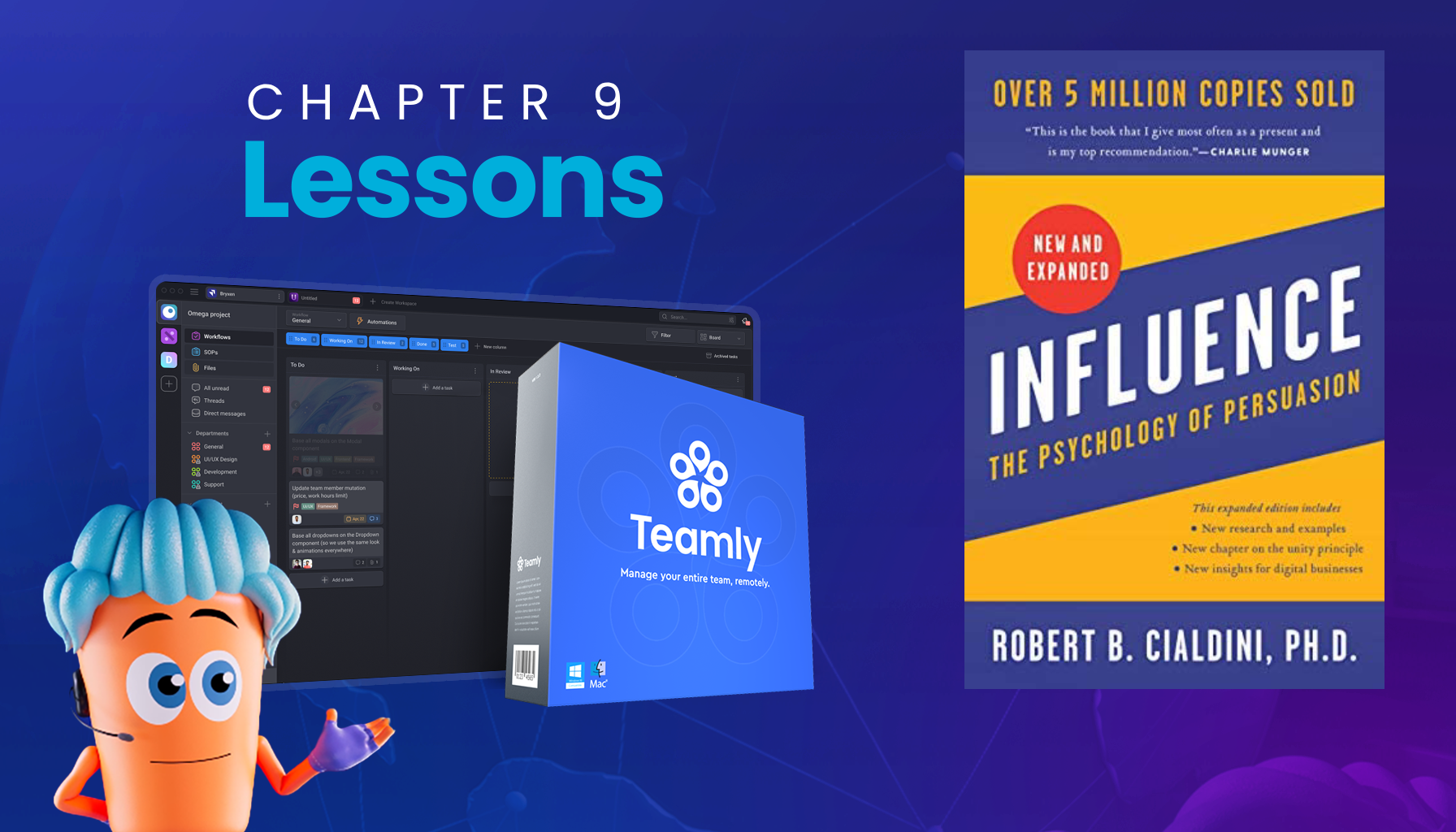
Some organizations reinforce reflection through software tools. For instance, Teamly helps teams coordinate projects methodically, balancing quick responses with structured, strategic planning. By minimizing reactive chaos, businesses can maintain speed while preserving clarity.
Embracing Instant Influence
It’s refreshing to see how Cialdini addresses both sides of “primitive consent.” Each chapter section highlights the very real power of automatic decisions without veering into scaremongering territory.
Instead, it’s an informed understanding of how these mental triggers work—plus some actionable insights on making them serve daily needs.
This part of the book is highly recommended for anyone who wonders why “click now” or “last chance!” messages can be so irresistible.
The content is proof that knowledge is the best defense: by staying aware, readers can enjoy the benefits of swift decision-making while avoiding the pitfalls of unchecked impulses.
Where to Get the Book:
Get your copy of the new and expanded edition of Influence by Robert Cialdini on Amazon