


Click the button to start reading
Key Takeaways from “Atomic Habits” by James Clear – Chapter 6
In Chapter 6 Clear argues that by redesigning our spaces and making good behaviors more accessible, we can drive positive change without relying on fluctuating willpower.
This chapter uses real-world examples to demonstrate how small environmental adjustments can lead to significant results.
Clear’s key point? Most people try to change habits by focusing on motivation, but lasting change comes from making the right choices visible and easy. By redesigning the environment and creating cues for good behavior, you can influence your actions automatically.
Here’s how Chapter 6 explains the power of environment and how you can leverage it to build successful habits.
Environment as the Invisible Hand That Shapes Behavior
One of the most striking concepts from Chapter 6 of Atomic Habits is the idea that environment influences habits more than willpower ever could.
James Clear cites the work of Dr. Anne Thorndike, a physician at Massachusetts General Hospital, who implemented a simple environmental shift in the hospital cafeteria that dramatically changed behavior.
Instead of using lectures or educational material to encourage healthier eating, Thorndike and her team rearranged the layout of the cafeteria. By placing bottled water in more visible locations around the room, they saw soda sales drop by 11.4% and bottled water sales rise by 25.8% — all without saying a word to anyone.
This is a powerful testament to how small environmental changes can yield significant results.

Design Your Environment to Make the Right Choice Obvious
Clear emphasizes that people often choose products based on their availability rather than their actual desire for them. Think about walking into a kitchen and seeing a plate of cookies on the counter — even if hunger isn’t present, the temptation to grab a cookie is. However, if a bowl of fruit were sitting there instead, you’d likely grab an apple or banana.
This is the basis of choice architecture — designing environments to make the healthy, productive choice the easiest one.
Clear suggests that a simple environmental redesign can make a habit almost automatic. By placing visual cues in key areas, you no longer need to rely on motivation to make the right decision.

Simple Environmental Shifts for Habit Success
There are practical, simple ways to apply these principles in everyday life. For example:
- Want to take your medication regularly? Keep the pill bottle next to the bathroom faucet.
- Need to drink more water? Fill a few water bottles in the morning and place them around the house or office.
- Hoping to read more? Leave the book on your pillow as a reminder to read before bed.
- Trying to exercise more? Keep your workout clothes visible and easily accessible.
These small shifts reduce friction and increase the likelihood of engaging in good habits. The more visible and accessible a habit is, the less effort is required to act on it.

Context Is the Cue: How to Build Habits Around Your Environment
Habits don’t exist in isolation. They are tied to a specific context — the places and times where you perform them. Drinking more at social events is a good example of this. The trigger isn’t just seeing a beer on the table; it’s the entire social setting — seeing friends order drinks, hearing music, or even just being at the bar.
Similarly, each room in your house or workspace has a particular association. The kitchen might be linked to eating, while the couch could be associated with watching TV or reading. These associations are powerful and can either support or hinder habit formation.
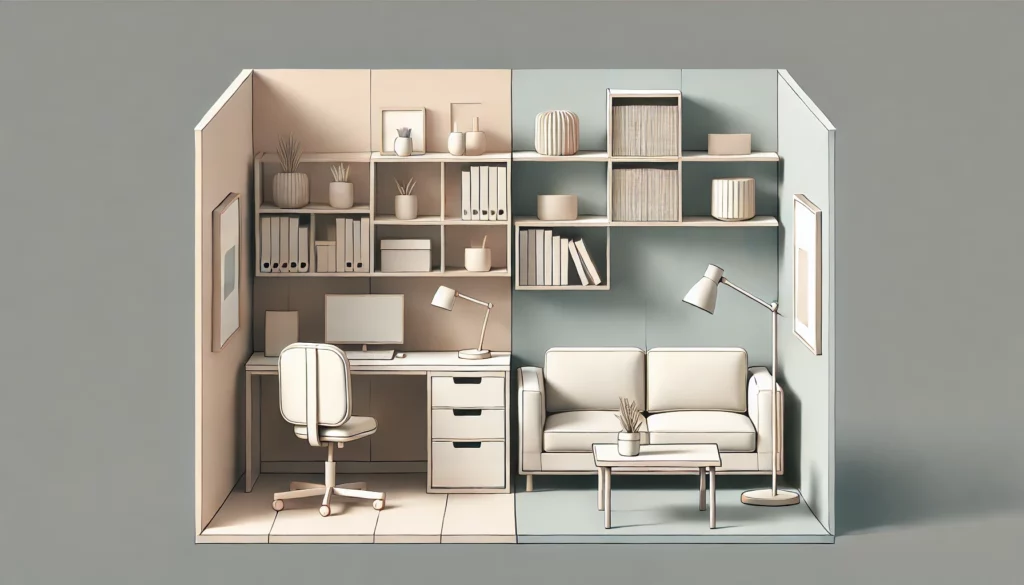
If certain spaces are associated with behaviors you want to avoid, it may be beneficial to redesign those spaces. For example, if you work from home, try to create a designated workspace that isn’t your kitchen table or couch. The separation of spaces helps signal different behaviors.
Avoid Mixing Contexts for Maximum Productivity
A common mistake many people make is mixing contexts for different activities. For instance, if you use your phone for both work and entertainment, it becomes easy to get distracted by social media when you need to focus. Clear suggests creating clear boundaries for different activities. Each context should have a purpose, making it easier to switch between tasks without distraction.
For example, at Teamly, users can create separate digital spaces for various projects, helping to keep tasks and collaborations organized. This principle of keeping focus zones intact is key to maintaining productivity and building habits in the workplace.
The Key Takeaway: Environment Over Willpower
Clear’s overall message is that environment is the invisible hand that shapes behavior. While motivation and willpower are important, they are far less reliable than the spaces we design around us. By creating environments that support positive habits and reduce friction for undesired ones, success becomes much more attainable.
Clear’s approach removes the pressure from needing to be constantly motivated. Instead, it empowers individuals to design their lives with intention, making it easier to default to productive actions.
If you’re ready to learn more, you can get your own copy of Atomic Habits by James Clear on Amazon.