

Click the button to start reading
OKRs Made Easy: How to Align Your Team Without Losing Flexibility
Monday morning. Slack’s lighting up, your calendar’s stuffed, and half the team is already firefighting. Sound familiar?
With Objectives and Key Results (OKRs), you swap the chaos for clarity—without chaining your people to rigid, year‑long plans.
This expanded playbook hands you a full toolkit: real‑world examples, alignment hacks, troubleshooting tips, and step‑by‑step routines that slot neatly into your next 90 days.

Why OKRs Beat Traditional Goal Lists
Old‑school goal sheets read like dusty encyclopedias—long, fixed, and rarely referenced once the ink dries.
OKRs behave more like GPS waypoints: programmed for the destination yet continuously recalculating the fastest route when reality changes.
- Focus: Limit each level of the org to 3 Objectives max, so nothing drowns in noise.
- Alignment: Every sprint task ladders up to a Key Result; random work stops sneaking in.
- Measurability: Key Results carry clear numbers; progress debates end quickly.
- Adaptability: Swap tactics mid‑stream while keeping your north‑star Objective intact.
Quick Reality Check
If your team can’t name this quarter’s Key Results without peeking at a doc, you don’t have alignment—you have wallpaper.
The OKR Anatomy—More Than Buzzwords
You’ve seen the textbook definition, but let’s ground it:
| Part | Plain‑English Role | Guardrails |
|---|---|---|
| Objective | Inspiring, qualitative end‑state | ≤ 8 words, no numbers, evokes emotion |
| Key Result | Binary proof you’ve arrived | from X to Y by Date; 3‑5 per Objective |
| Initiatives | Projects, experiments, tasks | Owned by teams; flexible, killable |
Sample OKR—Marketing Team
Objective: Become the go‑to voice for eco‑conscious coffee lovers.
- Increase organic blog traffic from 45 K → 90 K monthly sessions.
- Grow newsletter subscribers from 12 K → 25 K.
- Hit an average email open rate of 38 %.
Notice the Key Results pulse with numbers; the Objective sings the “why.”
Your 90‑Day OKR Implementation Blueprint
Rollouts fail when they try to boil the ocean. Use this staged timeline instead:
Phase 1 – Prep (Week 0)
- Mission Refresh: In a 60‑minute exec huddle, distill the company mission into one sentence. Everything flows from here.
- Baseline Audit: Pull last quarter’s metrics. Guessing baselines kills credibility.
- Draft Company OKRs: Brainstorm 5, ruthlessly cut to 3.
Phase 2 – Cascade (Weeks 1‑2)
- Team Workshops: Each department mirrors the structure: 1 Objective + 3‑5 Key Results.
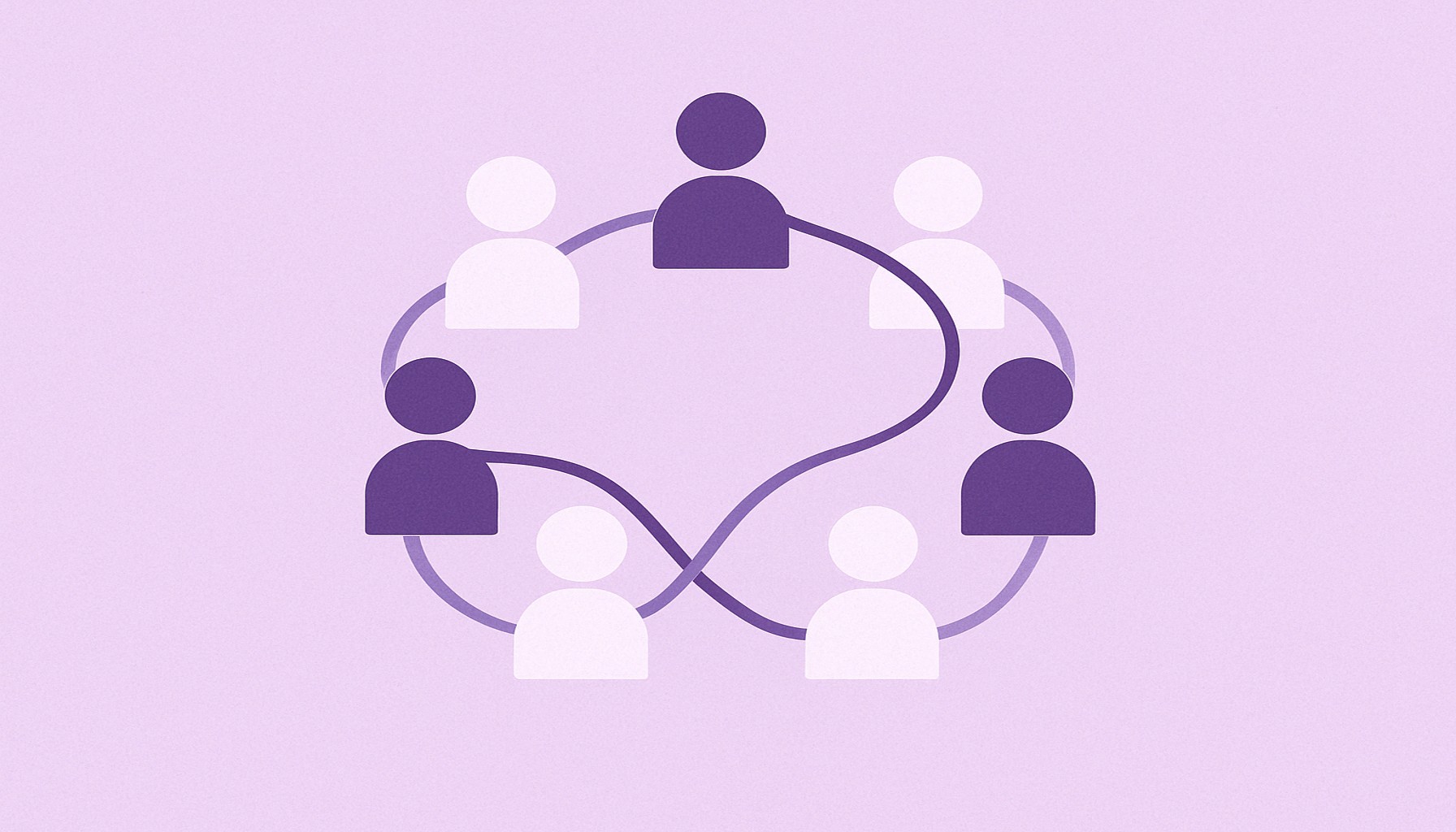
- Dependency Map: On a whiteboard (or in Teamly) draw arrows where one squad’s Key Result blocks another. Eliminate double dependencies.
- Approval Jam‑Session: 30‑minute rapid‑fire meeting: each lead reads their OKR; peers shoot holes until alignment locks.
Phase 3 – Kick‑Off (Week 3)
- Public Launch: Company‑wide meeting, 15 minutes max. Leaders read Objectives aloud; visuals on-screen.
- OKR Office Hours: Calendar a weekly 60‑minute drop‑in slot where you coach folks rewriting weak Key Results.
Phase 4 – Execution (Weeks 4‑11)
- Weekly Confidence Scores: Each owner rates their Key Result 0‑1 in Teamly. Anything < 0.7 sparks discussion.
- Sprint Planning: Scrum teams add one line to each Jira ticket: “KR impact: ____.” If it’s blank, question the work.
- Mid‑Cycle Calibration: At Week 6, allow one Key Result pivot per team if the market flipped.
Phase 5 – Retro (Week 12)
- Grade: ✅ 1.0, 🔄 0.7, ❌ 0.0. Average each Objective.
- Story Behind the Score: Spend 5 minutes narrating why a Key Result hit or missed.
- Snapshot & Share: Export Teamly dashboard as PDF, drop in #general.

Advanced Alignment Moves
1. The Ladder & Umbrella Model
Picture an umbrella: the canopy = company Objective; each spoke = department Objective. Under that, a ladder: rungs = Key Results. Climb the ladder, strengthen the umbrella.
2. Shared Key Result Swaps
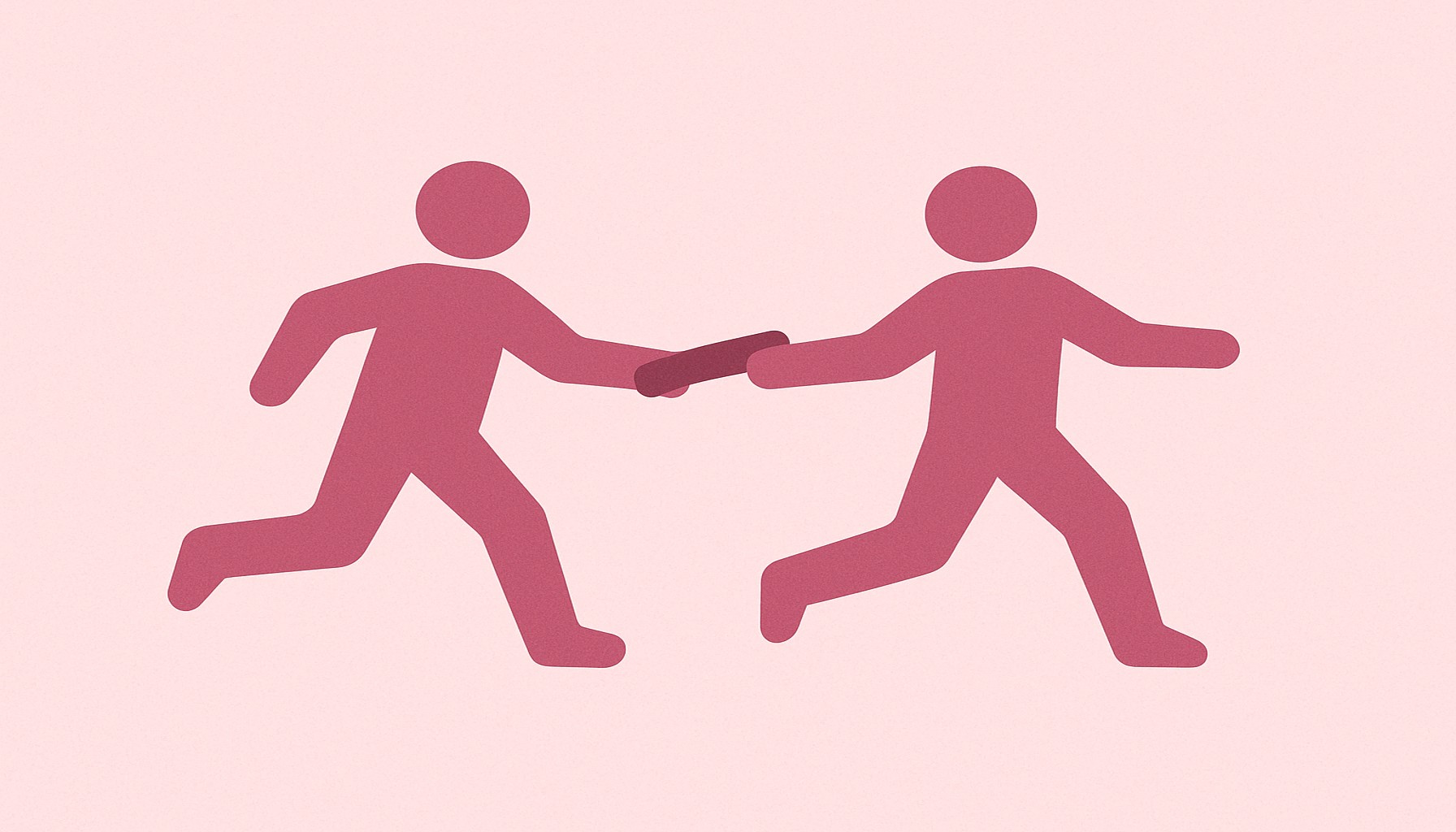
When two teams chase the same Key Result—say, “Reduce churn to 4 %”—ownership must rotate. Month 1 Customer Success leads; Month 2 Product owns. Shared accountability, fresh tactics.
3. The 70‑20‑10 Stretch Rule
- 70 % = Comfortably achievable (baseline growth).
- 20 % = Stretch but plausible.
- 10 % = Moon‑shot experiment.
Assign each Key Result a bucket so ambition stays balanced.
Integrating OKRs With Agile Sprints
You don’t need to choose between Scrum and OKRs—they complement each other.
| Agile Cadence | OKR Touchpoint |
|---|---|
| Sprint Planning (bi‑weekly) | Tag each backlog item to a Key Result. |
| Daily Stand‑ups | Update blockers in relation to Objectives, not just tasks. |
| Sprint Reviews | Demo features tied to measurable KR impact. |
| Sprint Retros | Capture lessons; feed into next quarter’s OKR drafting. |
Case Study—Remote Dev Squad
Objective: Slash deployment pain for globally distributed engineers.
- Cut average CI pipeline time from 18 min → 7 min.
- Achieve 95 % automated test coverage on core services.
- Decrease failed deployments per month from 14 → 4.
Each sprint, the team pulls two pipeline‑speed tasks, one test‑coverage task, and a retro action item that emerged from incident post‑mortems. Progress leaps without derailing feature work.
Rescuing a Stalled Key Result
- Diagnose the Blocker: Tech, skill, budget, or clarity?
- Generate Three Fresh Experiments: At least one should be tiny & fast (sub‑one‑day).
- Time‑Box the Fix: Allocate 1‑week spike; if velocity stays flat, pivot the KR.
- Escalate Early: Don’t wait until the retro to raise the flag—use your weekly confidence scores.
Common Pushback & Counter‑Arguments
| Pushback | Response Script |
|---|---|
| “Numbers kill creativity.” | “Numbers kill busy‑work. Creativity flourishes when people stop guessing what matters.” |
| “We’ll sandbag to hit 100 %.” | “Great—at the next retro we stretch targets or add moon‑shots. OKRs aren’t performance reviews; they’re learning loops.” |
| “It feels like extra paperwork.” | “Only if buried in docs. We’ll track everything on one live Teamly board—five‑minute updates, tops.” |
Your OKR Coaching Playbook
1. Spot Weak Key Results
If a Key Result contains verbs like optimize, support, or continue, it’s probably mushy. Replace with leading indicators (from X to Y), or drop it.
2. Run “Objective Karaoke”
Ask each person in a meeting to recite the team Objective without peeking. If even one stumbles, rewrite for clarity.
3. Hold Quarterly OKR Story Hour
Instead of death‑by‑slide‑deck, give each owner 3 minutes to narrate a customer anecdote proving a Key Result moved the needle. Stories stick better than charts.

Glossary of OKR Lingo (For the “Huh?” Moments)
- Aspirational OKR: Big, hairy, 40‑70 % success expected.
- Committed OKR: Must‑hit; tied to compensation or regulatory needs.
- Confidence Score: Weekly 0‑1 estimate of hitting a KR.
- Key Initiative: A project designed to move a KR—kill ruthlessly if it doesn’t.
- Moon‑shot: An audacious KR with maybe 10 % odds but giant upside.
FAQ—Lightning Round
How many OKR levels do I need?
Company, team, and—only if bandwidth allows—individual. Three is plenty.
What if a Key Result relies on data we can’t track?
Treat the tracking work itself as an Initiative due by Week 2, or pick a different metric. Blind KRs breed frustration.
Should OKRs tie to bonuses?
In early adoption, no. Keep them learning‑centric. Once maturity rises, you can bonus off select committed KRs.
How long should a cycle be?
Default to 90 days. Hyper‑growth startups may run 6‑week cycles; legacy orgs sometimes stretch to 4 months.
Templates & Resources
- OKR Starter Doc: Copy‑friendly Google Doc with Objective & Key Result fields.
- Confidence Score Tracker: One‑click Teamly template for weekly check‑ins.
- Kick‑Off Deck: 10‑slide PowerPoint skeleton to reveal company OKRs.
- OKR Retro Matrix: Miro board with grids for ✅ / 🔄 / ❌ plus lesson columns.
30‑Minute Kick‑Off Meeting Script
- 5 min: CEO riffs on the single company Objective.
- 15 min: Department leads read their OKRs—one slide each.
- 5 min: Live demo: updating a confidence score in Teamly.
- 3 min: Share calendar invites for weekly check‑ins.
- 2 min: Q&A lightning round (have FAQ slide ready).
Your Next Micro‑Action
Before this tab gets buried under emails, choose one to‑do:
- Block time for a mission refresh.
- Pull baseline numbers for your top metric.
- Draft a first‑cut Objective—eight words or fewer.
Hit save, share with a peer, iterate tomorrow. By this time next week, you’ll be steering with purpose instead of paddling in circles—and your team will thank you for the clear sense of why.