

Click the button to start reading
Key Lessons from Building a StoryBrand 2.0: Chapter 6
Chapter 6 of Donald Miller’s Building a StoryBrand 2.0 offers a compelling blueprint for businesses to refine their messaging and resonate more deeply with their customers.
The central lesson? Customers are not looking for another hero—they’re looking for a guide.
This chapter is packed with actionable insights and examples that make it a must-read for anyone looking to clarify their message and build stronger connections with their audience.

The Power of Positioning: Be the Guide, Not the Hero
One of the most common mistakes brands make is positioning themselves as the hero of the story. In storytelling, heroes are often portrayed as uncertain and in need of transformation.
By contrast, the guide is confident, empathetic, and equipped to help the hero succeed. Your customers are the heroes of their own stories, and your role is to guide them to victory.
Consider this: customers wake up every day with their own challenges and aspirations.
They aren’t looking for another hero to compete with. They’re searching for someone who can provide wisdom, direction, and solutions. The lesson here is clear—your brand must position itself as the guide that helps customers achieve their goals.
The Two Essential Traits of a Guide
Empathy
Empathy is about understanding and acknowledging your customers’ struggles.
It’s the bridge that creates trust. For example, when Bill Clinton famously said, “I feel your pain,” during his 1992 presidential campaign, he connected with voters on a deeply personal level. This approach helped him position himself as a guide who truly understood their challenges.
Empathy can be conveyed in marketing through simple, relatable statements such as, “We understand how it feels to…” or “Like you, we’ve experienced…” These phrases demonstrate that you see and hear your customers, fostering a bond of trust.
Competency
While empathy builds trust, competency cements respect. Your customers need to know that you have the expertise to solve their problems.
Demonstrating competency can take many forms, such as showcasing testimonials, statistics, awards, or case studies. For instance, including a statistic like “95% of our customers saw results in just one week” can reassure potential buyers that your product delivers on its promises.

Practical Ways to Showcase Competency
- Testimonials: Share success stories from satisfied customers. Brief, focused testimonials can significantly boost credibility.
- Statistics: Use quantifiable data to highlight your product’s effectiveness.
- Awards: Showcase any industry recognition you’ve received to build trust.
- Press Mentions: Highlight media coverage or endorsements to add social proof.
- Logos: Display logos of notable clients or partners to reinforce your credibility.
For example, the skincare brand Némah leveraged its origin story to connect with mothers seeking safe products.
By combining empathy (understanding mothers’ concerns) with competency (rigorous product development), Némah successfully positioned itself as a trusted guide.
Additionally, case studies can be a powerful tool to demonstrate how your brand solves real-world problems.
By presenting detailed narratives of customer challenges and how your product or service provided a solution, you highlight both your empathy for the issue and your capability to address it effectively. Case studies also add depth to your marketing materials, making them more compelling and relatable.
Another critical aspect is the consistent use of storytelling to highlight your customers’ transformation.
Sharing how others have overcome challenges with your help not only reinforces your role as a guide but also provides aspirational value for potential clients. People connect with stories, and by illustrating success through relatable narratives, you position your brand as both approachable and effective.
Making a Great First Impression
First impressions matter, especially in business.
Harvard professor Amy Cuddy’s research highlights two critical questions people subconsciously ask when meeting someone new: “Can I trust this person?” and “Can I respect this person?” Your brand’s messaging must address these questions upfront by demonstrating both empathy and competency.
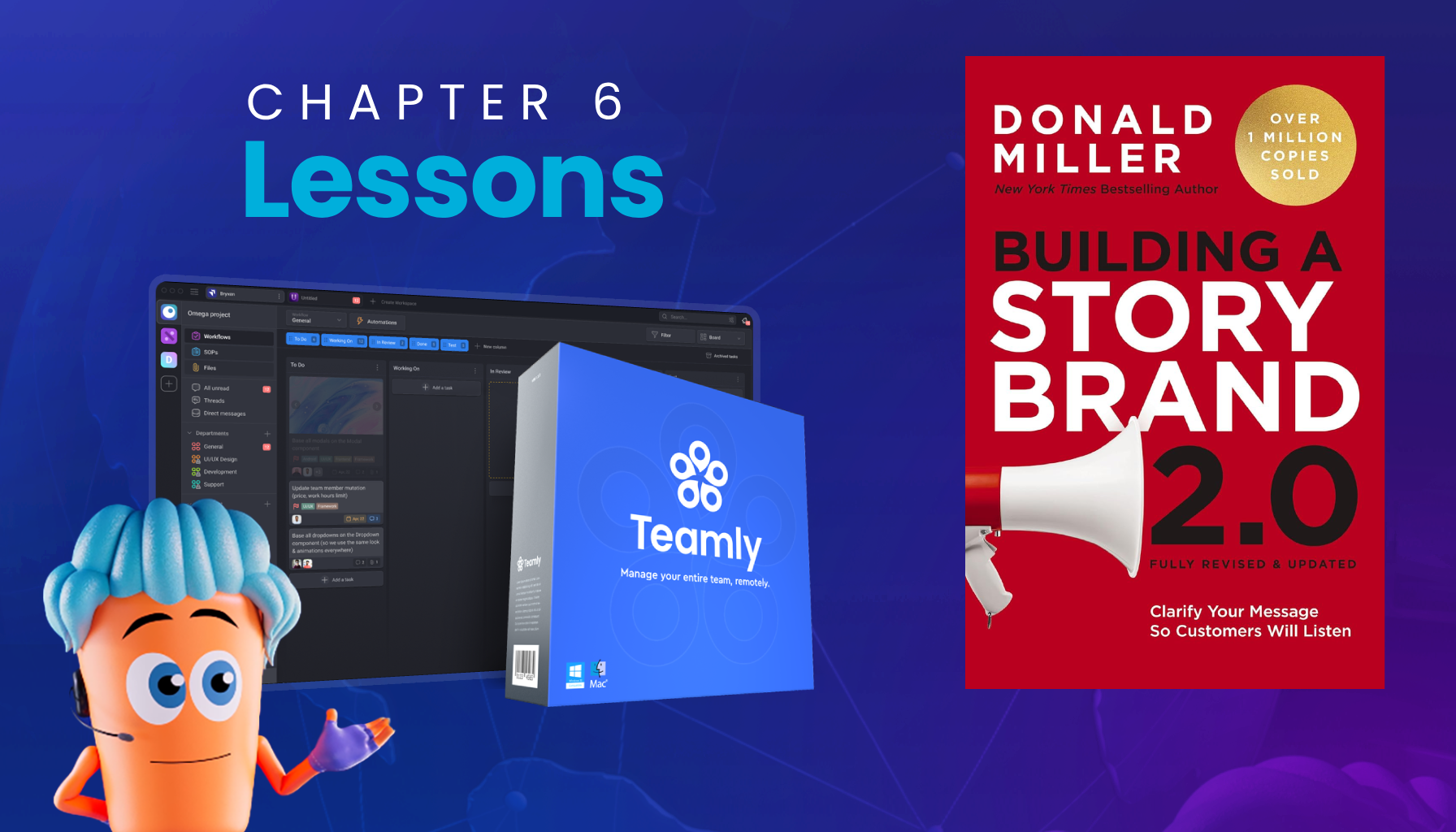
Consider how Teamly, a business management software, positions itself as a trusted guide.
By emphasizing how its tools simplify team collaboration and enhance productivity, Teamly addresses customer pain points while showcasing its expertise in the field. This approach makes it easier for customers to trust and respect the brand.
Beyond these initial impressions, your brand must consistently reinforce trust and respect throughout the customer journey.
Every touchpoint, from your website to your customer service interactions, should reflect the same level of care and professionalism. Customers are more likely to engage with and recommend brands that prioritize their needs and deliver on promises.

Empathy and Competency in Action
In Building a StoryBrand 2.0, Donald Miller emphasizes that the combination of empathy and competency is what transforms a brand from just another option into a trusted guide.
By addressing customers’ pain points and proving your ability to help them succeed, you create a compelling narrative that resonates deeply with your audience.
Brainstorming how to integrate these principles into your marketing can make a significant difference. Ask yourself:
- What empathetic statements can you use to connect with your customers?
- What evidence of competency can you showcase to build credibility?
Moreover, maintaining authenticity is key. Customers are increasingly savvy and can quickly detect insincerity.
Ensure that your empathy is genuine and your claims of competency are backed by real results. Authenticity not only builds trust but also fosters long-term loyalty.
Consider implementing an internal review system to ensure all customer touchpoints reflect your brand’s values of empathy and competency.
For example, regularly evaluating your customer service scripts, marketing materials, and social media interactions can help identify areas for improvement. Small adjustments can make a big difference in how customers perceive your brand.
Takeaways for Your Brand
To position your brand as a guide:
- Focus on the customer’s journey, not your own story.
- Use empathy to show you understand their challenges.
- Back up your claims with tangible evidence of competency.
- Leverage your brand story to highlight how your experiences make you uniquely qualified to help customers.
- Regularly assess and refine your communication strategies to ensure alignment with your brand’s core values.

To learn more about how to transform your messaging and position your brand as a guide, get your copy of Building a StoryBrand 2.0 on Amazon.